Don't Forget to Breathe
How often do you think about your breathing? Most of the time we hardly notice it, we simply breathe. But when breathing becomes difficult, it can quickly become the only thing we can think about.
When God created mankind, He breathed His own breath into him. In the same way He designed our bodies so that breathing would happen automatically. It is an involuntary function, yet with a little effort, we can still bring it under conscious control. Inhaling brings oxygen in and exhaling releases carbon dioxide. Because of this simple exchange, conscious, controlled breathing acts like the body's natural reset button for the body and mind, offering a wide range of benefits.
The Connection Between Breathing and the Brain
The autonomic nervous system has two main branches: the sympathetic system, which activates the fight, flight, or freeze responses, and the parasympathetic system, which supports rest and digestion. Connecting these systems is the vagus nerve, which plays a key role in regulating the body's stress response.
When we take slow, controlled breaths, we send calming signals through the vagus nerve to the brain. In response, the body helps regulate stress hormones such as cortisol and increases levels of GABA, a neurotransmitter associated with calmness. This is one reason deep breathing can produce a noticeable sense of relaxation so quickly.
In addition, deep diaphragmatic breathing has been shown to support the body's ability to clear cortisol more efficiently. As cortisol levels decrease, the nervous system gradually shifts out of a heightened stress state, allowing the body to reset. we begin to feel calmer and effectively reset the body's stress hormones.
Carbon Dioxide and Oxygen Levels
Breathing also influences the balance of gasses in the blood, which has a direct effect on brain function. Rapid, shallow breathing can lower carbon dioxide too much. When this happens, neurons in the amygdala become more excitable, which can increase anxiety and lead to more impulsive reactions.
By contrast, slow, deep breathing helps stabilize carbon dioxide levels. This supports a calmer amygdala and reduces the intensity of the brain's stress response. At the same time, controlled breathing increases oxygen flow to the prefrontal cortex, the part the brain responsible for our decision-making, focus, and self-control. In this way, better breathing directly supports clearer thinking.
Beyond brain chemistry, focused breathing also strengthens interoception - our ability to senses what is happening inside our body. Greater body awareness can reduce anxiety, stress, and even dissociation, while helping us stay more grounded in the present moment. (Information from Dr. Tracey Marks, The Neuroscience of Breath)
I find it fascinating that simply by controlling our breathing, our bodies and our minds can provide so many benefits, including better mental and physical health.
Breathing Techniques to Try
Diaphragmatic (Belly) Breathing: Place one hand on your chest and the other on your belly. Inhale slowly through your nose, allowing your belly to rise. Exhale slowly through your mouth.
Box Breathing: Inhale for a count of 4, hold for 4, exhale for 4, and hold again for 4.
Physiological Sigh: This technique acts a reset for the respiratory and nervous system. Inhale once through your nose, followed immediately by a second inhale through your nose. Then release all the air from your lungs with a long, slow exhale through your mouth. Repeat several times.
The 4-7-8 Technique: This method can be especially helpful for falling asleep. Inhale slowly through your nose for 4 seconds. Hold your breath for 7 seconds. Exhale completely though your mouth with a "whoosh" sound for 8 seconds. Repeat three or four times.
Alternate Nostril Breathing: This practice may help balance the brain's hemispheres, reduce stress, and promote mental clarity. Use your right thumb to close your right nostril and inhale through your left nostril. Then close your left nostril with your ring finger and exhale through your right nostril. Reverse the cycle several times.
An Invitation to Breathe Again
Breathing is something we do without thinking—until we need it most.
And yet, as we’ve seen, something so simple holds the power to calm the body, steady the mind, and gently bring us back into balance.
But knowing this… and experiencing it… are two different things.
We want to invite you into a space where you don’t have to think about the technique, the timing, or the science —
a space where your body can naturally settle, your breathing can deepen, and your mind can finally slow.
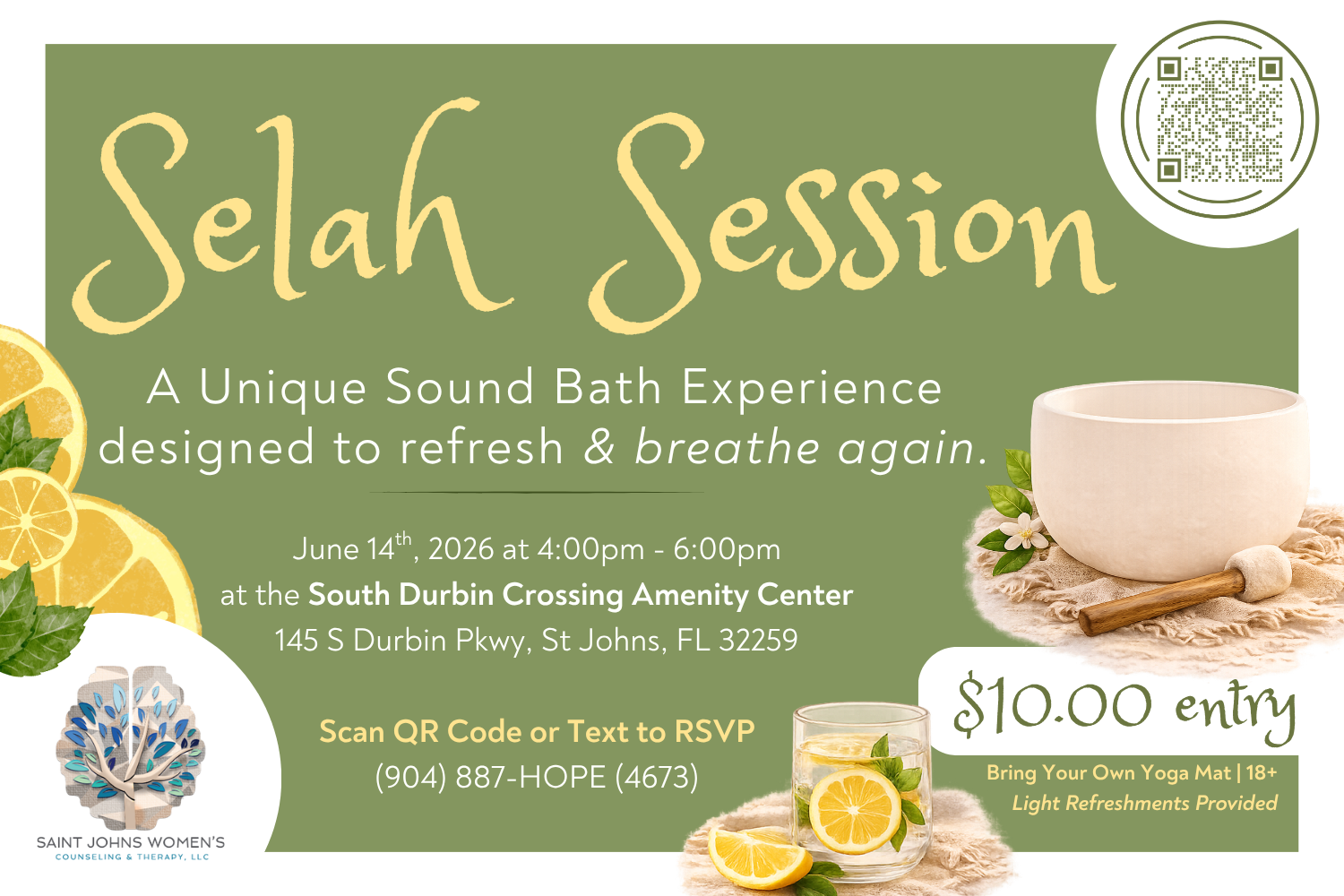
Join Us for a Selah Session
Our June Selah Session is designed as a guided experience of rest, reflection, and renewal—where therapeutic sound, Scripture, and intentional stillness come together to support your nervous system and reconnect you with a steady, grounded rhythm.
Inspired by the simple act of breathing and the body’s natural ability to reset, this session offers space to release tension, quiet internal noise, and return to yourself with clarity and calm.
You don’t have to force the reset.
You simply have to allow it.
Step into an environment created for you to pause, breathe again, and be refreshed—physically, mentally, and spiritually.
Spots are limited. We encourage you to reserve in advance and give yourself this time to rest.