Our human minds are a complex system of cognitive, emotional, and conscious processes driven by the physical architecture of the brain that God created. Below is a very brief overview of what makes up our mind.
Biological Piece
The brain is made up of what are called regions. There is the cerebellum, the limbic system, and the brain stem, which regulate everything from basic survival functions to complex abstract thought and memory.
There are billions of neurons that transmit data via electrical impulses, synapses, and chemical neurotransmitters like dopamine and serotonin in our brains.
Recently, it has been discovered that the brain can physically rewire these neural pathways in response to learning, therapy, and healing from emotional trauma. This is called neuroplasticity.
Cognitive and Psychological Processes
Information processing goes on in our minds. Cognitive psychology explores these systems of internal processes, such as attention, memory, language acquisition, and problem-solving. I will leave that up to them.
There is also the idea of consciousness. According to the Theory of Global Workspace, consciousness arises when information is broadcast across distributed brain networks.
Then there is something called dual-process decision-making, where a fast, unconscious response interacts constantly with slower, deliberate, conscious thought.
The Mind-Body Connection
Our mindsets, psychological expectations, and beliefs can directly influence our physiological health, alter our recovery rates and stress responses, and affect cognitive performance.
There are now scientific communities that continue to study the mind-body issue, and they are exploring whether mental phenomena are strictly physical or require a broader framework. I would like to add that there is also a spiritual piece that has recently been looked into as an important part of our minds and thoughts. In the past, this was mostly overlooked, but recent studies demonstrate the importance of spirituality and, particularly, how a biblical worldview impacts a person's thought processes.
Brain science and cognitive psychology are among the most versatile psychological specialty areas today and are in great demand. Almost all professions have a compelling interest in how the brain works. Educators, curriculum designers, engineers, scientists, public health and safety officials, architects, and even graphic designers all want to know more about the mind and how the brain processes information, mostly so they may use this information to influence people to the best of their advantage.
The research and its resulting applications have become an integral part of how organizations, schools, businesses, and even clinical settings function.
Why Is Our Mind So Powerful?
The mind is powerful because it directly influences our biology, shapes our daily reality, and constantly rewires its own physical structure through thought.
The Bible teaches that changing our thoughts and renewing our minds leads to peace and spiritual growth in Romans 12:2:
"…but be transformed by the renewal of your mind, that by testing you may discern what is the will of God, what is good and acceptable and perfect."
Our thoughts trigger real physical changes, releasing stress hormones like cortisol or feel-good chemicals like serotonin. The Harvard Health publication notes that the placebo effect demonstrates how belief can physically reduce pain and change symptoms.
Again, Scripture in Philippians 4:8 encourages us to focus our thoughts on whatever is true, noble, right, pure, lovely, and admirable. In other words, when we think about these positive things rather than all of the negative news going on in our world, our minds are able to calm down, and we can even physically relax.
What we believe affects our actions. What you focus on expands. Consistent thoughts turn into core beliefs, which drive our daily decisions, actions, and ultimate life outcomes.
Your brain physically changes based on what you repeatedly think and do. This ability to rewire learning patterns means past trauma or negative habits do not have to define your future.
Signs of a Sound Mind
Mentally sound people manage their emotions, face reality honestly, and take responsibility for their lives.
They accept reality.
They look at facts and feedback objectively instead of denying or altering the truth.
They own their mistakes.
They take responsibility for their actions and do not play the victim when things go wrong.
They set boundaries.
They say "no" without guilt and avoid trying to please everyone.
They regulate their emotions.
They process feelings like sadness or anger instead of suppressing them, allowing themselves to recover and move forward.
They embrace discomfort.
They step outside their comfort zones and view challenges as chances to grow rather than as reasons to quit.
They seek help when needed.
They recognize when they need support from loved ones, friends, or even professionals and do not view vulnerability as a weakness.
Scripture even addresses this in 2 Timothy 1:7, saying that God gives us a spirit of power, love, and a sound mind rather than timidity. Allowing God's Word to change the way we think is the first step toward believing in Him to do the work in our lives to develop the sound mind that we desire.
The Practice of Renewal
A sound mind is not a mind that never struggles, worries, becomes overwhelmed, or gets things wrong. It is a mind that is willing to be renewed.
Our thoughts are powerful, but they do not have to remain fixed. Just as the brain can develop new pathways through repeated experiences and behaviors, we can learn to recognize patterns of thinking that are no longer healthy or true and intentionally replace them with something better.
This is part of what makes Romans 12:2 so meaningful:
“Be transformed by the renewal of your mind.”
Renewal asks us to pay attention to what we are allowing to shape us. What thoughts are we rehearsing? What beliefs have we accepted as truth? What experiences are still influencing the way we see ourselves, other people, or God?
Sometimes renewal means challenging a thought. Sometimes it means establishing a boundary, changing a habit, processing an emotion, seeking wise counsel, or simply becoming still enough to recognize what has been happening within us.
And sometimes, it means giving ourselves time.
Transformation is rarely instantaneous. It happens as new patterns are practiced, healthier perspectives are strengthened, and God's truth is allowed to take root in the places where fear, hurt, or unhealthy beliefs once lived.
Our minds truly are marvelous. God created them with the capacity to learn, adapt, heal, and grow. We can participate in that process by becoming intentional about what we think, what we believe, and what we continually allow to occupy our minds.
Seek what is true. Believe what is good. Reflect on what is shaping you. Live from a renewed mind.
Ready to Cultivate a Sound Mind?
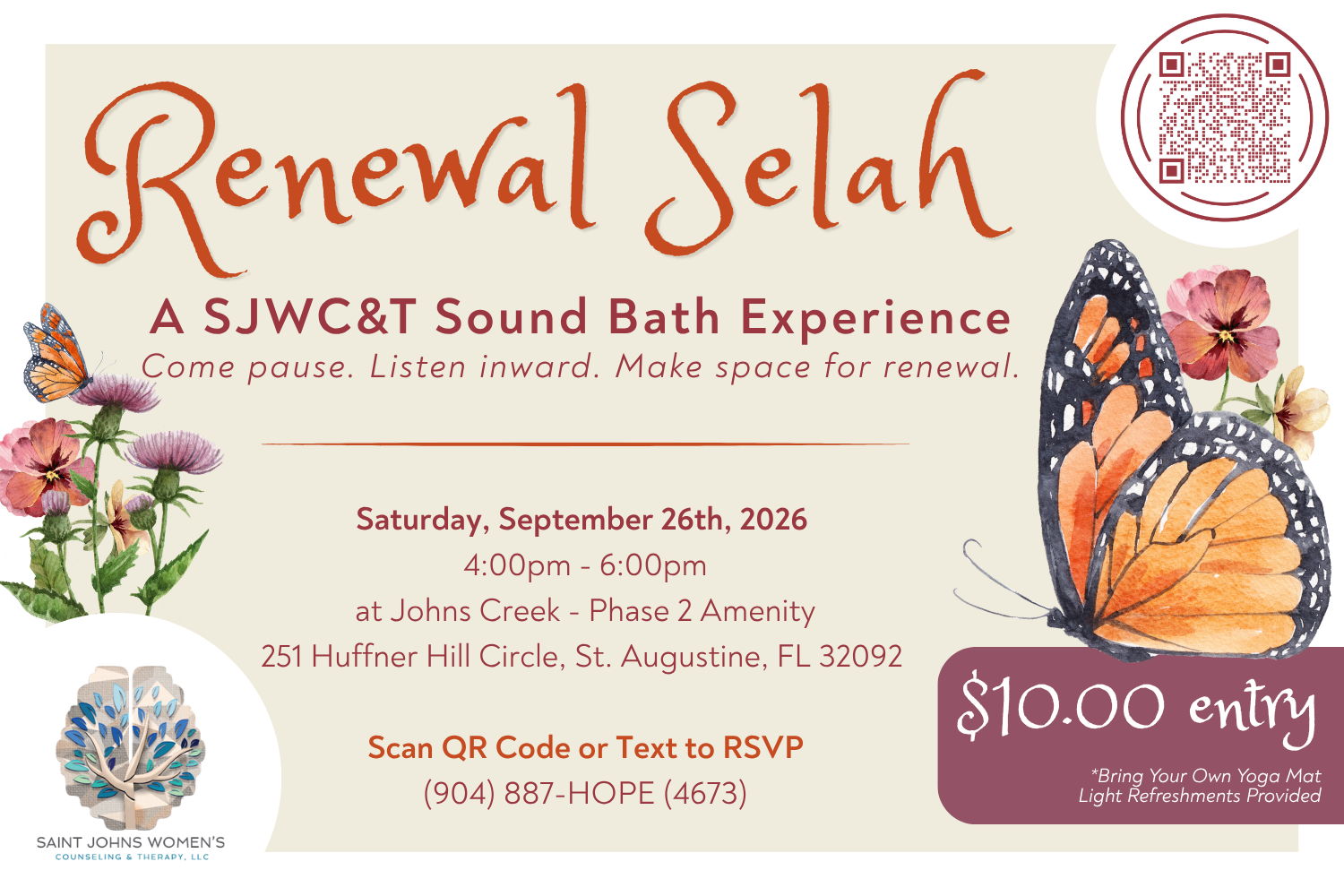
We invite you to step away from the noise and create intentional space for the renewing of your mind at our monthly sound bath experience, Renewal Selah Session.
*Bring Your Own Yoga Mat | Light Refreshments Provided.
To grab a seat for you or a friend, click the invite below!